


Explore 5 Chiayi’s Hidden Charms Beyond Alishan | Chiayi City 2025 Autumn Travel Guide
When people think of Chiayi, the first image that often comes to mind is Alishan, the breathtaking mountain park famous for its sunrise and forest railway. But Chiayi City itself holds even more hidden treasures worth exploring. Once a thriving center during the Japanese colonial era, Chiayi is rich in history, temples, wooden architecture, and local cuisine that reveal the soul of southern Taiwan.
If you’re planning a trip in autumn 2025, don’t miss this guide! I’ll show you how to spend a meaningful day in Chiayi City—featuring historic spots, local street food, and cultural events happening this season.
First Stop – Cheng Huang Temple: The Spiritual Heart of Chiayi

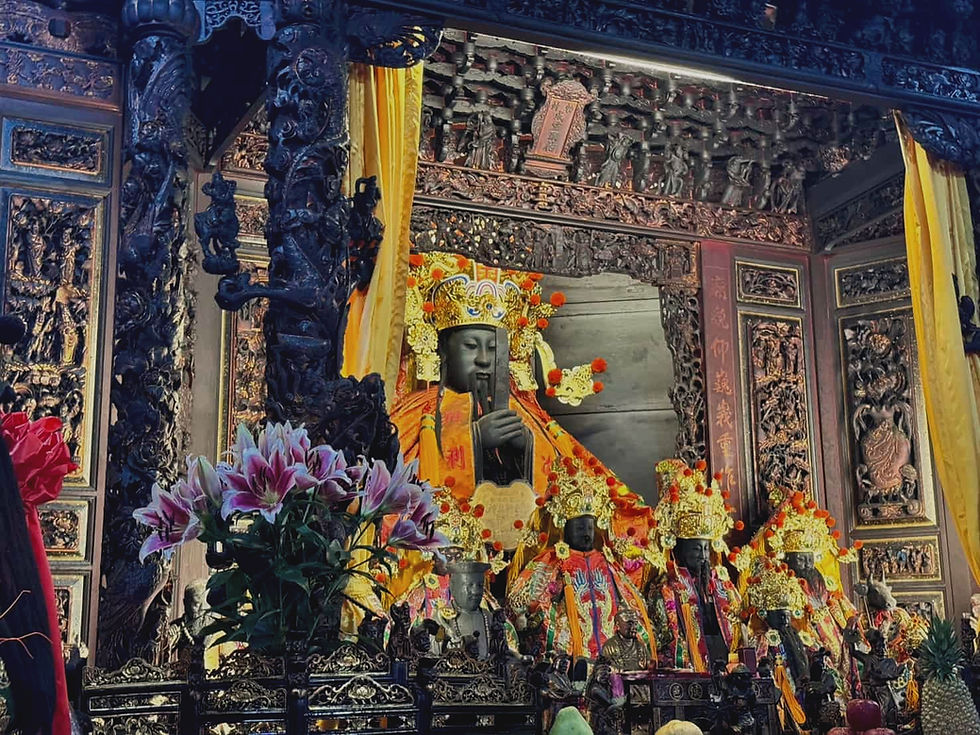
Located in the old town, Cheng Huang Temple (城隍廟) has been the spiritual and cultural center of Chiayi since its founding in 1715 during the Qing dynasty. Back then, Chiayi—known as Zhuluo County (諸羅縣)—was an important administrative hub.
The temple is dedicated to the City God (Cheng Huang Ye), a guardian deity responsible for maintaining moral order and overseeing justice in the underworld. In ancient times, these temples played a vital role in local governance and community rituals. Even in modern Taiwan, the temple continues to symbolize justice and protection, reminding people to act with integrity and kindness.
3 Must-See Highlights Inside Cheng Huang Temple, Chiayi
The Cheng Huang Temple in Chiayi is not only a spiritual center but also a living museum of Taiwan’s cultural fusion — blending Chinese artistry, Japanese influence, and local beliefs. Here are three remarkable features you shouldn’t miss when visiting this historic site.
The Caisson Ceiling: A Masterpiece of Wooden Craftsmanship

As you enter the main hall, look up — and prepare to be amazed. The octagonal caisson ceiling (八角藻井) is an exquisite example of traditional wood joinery built entirely without nails, supported only by precise mortise-and-tenon joints.
Take a closer look and you’ll discover over 108 hand-carved figures nestled within the structure — including Western gentlemen, winged deities, and even a nude female figure! This rare combination of Chinese and Western motifs makes the caisson a unique artistic treasure that reflects Chiayi’s openness to cultural exchange during the late Qing and Japanese periods.
Hidden Painted Murals Beneath the Shrines
If you kneel or squat near the corners beneath the side shrines, you’ll find hidden painted porcelain tiles that tell a powerful story. On the right side lies the Dragon Wall, where you can spot Mount Fuji, symbolizing Japanese authority during the colonial era. On the opposite side, Mount Jade (Yushan) — Taiwan’s highest peak — stands proudly as a symbol of local resilience. These murals reveal how the temple subtly preserved Taiwanese folklore and faith under colonial suppression — a quiet act of cultural endurance expressed through art.
The Japanese Waka Couplets: A Rare Piece of Colonial History

Inset on both sides of the main hall are Koji pottery plaques inscribed with Japanese waka poetry, dating back to the early 20th century. These delicate couplets were commissioned by local gentry and worshippers to maintain harmony with the colonial government and protect the temple from destruction. Today, these may be the only surviving waka inscriptions in any Taiwanese temple — a tangible reminder of how art, diplomacy, and faith intertwined during Japan’s occupation of Taiwan.
Bonus Highlight: The Giant Abacus of Justice

Hanging high above the temple’s main entrance is a giant abacus, a symbol of divine fairness. Each bead represents the recording of human deeds — every act of kindness or wrongdoing carefully tallied by the City God. The abacus embodies the temple’s core values: justice, clarity, and balance in moral judgment. It’s also a nostalgic nod to traditional Taiwanese life — many locals, including myself, once learned to calculate on a real abacus during childhood!
Second Stop — A Kitchen of Chiayi: Discover East Market — 100 Years of Street Food & Local Flavors
In Taiwan, you’ll often find that the most vibrant markets sit right beside temples — and Chiayi is no exception. Just steps away from Cheng Huang Temple, the East Market (Dongshi Market, 東市場) is a true culinary treasure trove and the beating heart of the city’s daily life. Built in 1914 during the Japanese era, East Market has served generations of Chiayi locals. Even after a century, it continues to preserve its historic cypress roof structure, a rare architectural detail that still tells the story of old Chiayi.
As you stroll through the narrow aisles, you’ll find decades-old food stalls run by families who have been perfecting their recipes for generations.
Must-try dishes include:
Beef Offal Soup (牛雜湯) — rich and flavorful, a beloved local comfort food.
Glutinous Rice Tube Cake (筒仔米糕) — sticky rice steamed to perfection in bamboo tubes.
Spring Rolls (春捲) and Fried Meat Rolls (網絲肉捲) — crunchy bites with local flair.
Starfruit Ice (楊桃冰) — nostalgic and refreshing drink that Chiayi people grew up with.
Each stall in East Market has its own loyal fans, and together they create a living museum of Chiayi’s culinary heritage.
Third Stop – Taiwan Tile Museum: Preserving Taiwan’s Vintage Beauty One Tile at a Time
Located inside a historic 80-year-old timber building, the Taiwan Tile Museum is a true cultural treasure of Chiayi City. The museum’s floor is made entirely of ancient cypress wood, and visitors are asked to remove their shoes before entering — a small gesture that makes you feel instantly grounded and connected to the timeless spirit of the place.
This is the only museum in Taiwan dedicated to vintage tiles, housing tens of thousands of handcrafted pieces once used to decorate homes during the early 20th century. These art deco–inspired tiles were popular between 1915 and 1935, reflecting the aesthetics of Taiwan’s Japanese colonial period. When the war began in 1935, the production of such luxurious tiles was halted, making each surviving piece today incredibly rare.
As you walk through the exhibition, you’ll find tiles adorned with rich cultural symbols — motifs representing the Taiwanese people’s deepest wishes and beliefs: Peonies (牡丹) for wealth and prosperity. Pomegranates (石榴) symbolizing fertility and family blessings. Longevity peaches (壽桃) for long life. Bats and butterflies (蝙蝠與蝴蝶) as auspicious symbols of happiness and fortune.
What makes the museum even more extraordinary is its founder’s story. Without government funding or institutional support, the curator single-handedly traveled across Taiwan, salvaging tiles from old houses on the brink of demolition. Each piece he rescued is not just a fragment of art but a piece of Taiwan’s architectural and cultural memory.
Fourth Stop – Smart Fish (林聰明沙鍋魚頭): Chiayi’s Iconic Fish Head Stew Featured on Netflix

When it comes to Chiayi’s must-eat dishes, few can rival the fame of Smart Fish (Lin Cong Ming Sha Guo Yu Tou, 林聰明沙鍋魚頭). Founded in 1953, this humble food stall in a Chiayi night market has grown into a culinary institution passed down through three generations.
What makes Smart Fish’s fish head stew so unforgettable is its perfectly balanced broth, simmered for over eight hours every day.
The rich soup base is made from pork bones, dried shrimp, cabbage, scallions, and pork belly, all infused with their signature homemade satay sauce. The silver carp head, first deep-fried to a golden crisp, is then gently cooked in the satay broth for up to 10 hours, creating layers of deep, umami flavor. Added ingredients like tofu skin, tofu, and cabbage absorb the broth’s essence, delivering both richness and warmth in every bite. Whether you’re exploring Chiayi’s cultural old town or enjoying the nearby East Market, make sure to stop by their brand-new flagship restaurant — and taste what locals have loved for more than seven decades.
Check on Google map: https://share.google/K4E8wcBOCfCkMDaj6
Final Stop – Beixiang Lake Light Festival: Step Into Disney’s Alice in Wonderland
Chiayi’s beloved Mid-Autumn light festival returns again this year! Since 2020, the annual Chiayi Light Art Exhibition — “Weaving with Light, Dancing with Shadow 2025” has transformed Beixiang Lake Park into a dazzling world of light and imagination.
For the first time, the 2025 theme features Disney’s classic Alice in Wonderland. The curator shared that the park’s tall trees, shimmering lake, and open lawns perfectly resemble the whimsical world Alice once explored. Highlights include a 30-meter light tunnel that feels like a time portal, floating baby oysters on the lake, a 9-meter-tall giant Alice resting in a rose forest, and the Cheshire Cat mysteriously hovering between the trees.

🚄 How to Get to Chiayi
Chiayi City is easily accessible by train.
TRA Chiayi Station – located in the city center, convenient for downtown hotels and attractions.
HSR Chiayi Station – for Taiwan High-Speed Rail travelers; note that it’s located about 20 minutes away from central Chiayi.
🚌 How to Get to Beixiang Lake Park
On weekends and national holidays, a free shuttle bus runs directly from Chiayi TRA Station to the park.
You can also take the Taiwan Tourist Shuttle – “Guanglin Wujia Line” (光林我嘉線), which stops at Beixiang Lake Park.
For a more flexible option, rent a YouBike 2.0 and enjoy a scenic ride around the city.
Did you enjoy this one-day travel guide to Chiayi City? If you found it helpful or inspiring for your Taiwan trip, feel free to leave a comment below and share your thoughts!


Comments